Imagine this scenario: You’ve found a SaaS tool that normally costs $30 a month, but by chance you come across an offer that gives you lifetime access for a one-time payment of $79—an amount that’s less than the cost of a three-month subscription, for access that never expires.
It might sound too good to be true—and sometimes it really is. In this guide, we’ll explain in detail how “lifetime access” offers for SaaS services work in 2026, where to find reliable offers, why major platforms—such as Zoho One—deliberately avoid this pricing model, and how to distinguish a genuine deal from a product that might disappear from the market within twelve months. We won’t rely on hype or flashy promises; instead, we’ll base our analysis solely on the numbers and actual performance records.

What Is a SaaS Lifetime Deal?
The Lifetime Deal (LTD) is a one-time payment that grants you lifetime access to the service, instead of paying the same fee monthly or annually, prices for these deals typically range from $29 to $299 (a three-month subscription—or sometimes even shorter—can cost more than this), serving as an alternative to subscriptions that usually cost between $10 and $99 (or more) per month.
The “catch”—or the key point—lies in a single word: The phrase “lifetime” refers to the product’s lifespan, not your own; if the company that developed the tool goes out of business, changes its business model, or is acquired by another company, you may lose access to the software regardless of how much you paid upfront.
Where to Find Lifetime Deals in 2026
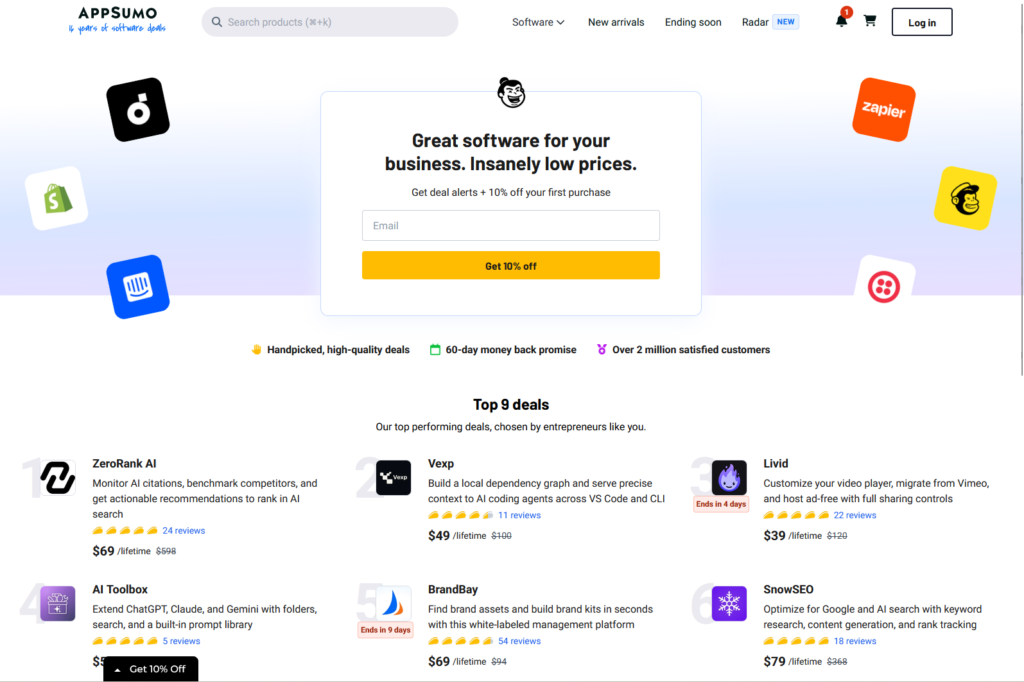
Four marketplace platforms are dominating the “lifetime deals” space this year. AppSumo remains the largest, boasting a community of over one million verified buyers and offering a standard 60-day no-questions-asked refund policy on all deals—effectively turning every purchase into a two-month risk-free trial. Dealify, DealMirror, and PitchGround round out the landscape, each with a slightly different focus, its own refund policy, and a diverse range of deals; specifically, DealMirror tends to offer lower prices with a shorter 30-day refund period.
The Real Math: Lifetime Deal vs Monthly Subscription
Here’s the math that really matters: A tool that costs $30 per month totals $1,800 over five years, whereas a “one-time, lifetime purchase” (LTD) that costs $79 pays for itself in less than three months, and everything after that is pure savings compared to continuing with a recurring subscription.
These calculations are the exact reason why founder communities—especially among bootstrapped and one-person startups — to consistently gravitate toward lifetime purchase deals; it’s often possible to assemble an effective toolkit (stack) consisting of five or six tools for a total cost of less than $500, eliminating the need to pay between $3,000 and $6,000 annually in combined subscription fees.
Case Study: Why Zoho One Doesn’t Sell Lifetime Deals
If you search for “Zoho One lifetime deal,” you’ll find a product page on AppSumo; but don’t let that fool you. In reality, Zoho One isn’t sold as a one-time “lifetime” deal like smaller tools are; instead, it uses an annual billing model only, divided into two licensing models: “Flexible User Pricing” at approximately $90 per user per month, and “All-Employee Pricing” at approximately $37 per user per month. Both models are billed annually, and there is no true “lifetime” purchase option available.
It’s helpful to recognize this pattern: platforms geared toward large enterprises that are actively expanding—such as Zoho One, Salesforce, and HubSpot—rarely offer true “lifetime” deals, because their business models rely on predictable, large-scale recurring revenue, not one-time cash flows. “Lifetime” deals —almost without exception—a strategy employed by self-funded SaaS startups seeking a quick revenue boost and an initial user base, not by companies that manage more than 50 integrated business applications, such as Zoho One.
This doesn’t mean Zoho One is a bad choice; it simply means that if you’re specifically looking for cost savings through “lifetime” deals, you won’t find them in a comprehensive, integrated suite like Zoho One. Instead, you can get more long-term, guaranteed value by starting with the free plan offered by Zoho One (the free version of Zoho CRM supports up to 3 users), then upgrading to a paid annual plan once your team size exceeds the limits of the free plan.
The Risks Nobody Talks About
In reality, and based on my experience, lifetime deals are not without risks, as their failure rate is higher than most buyers of these deals expect, Analyses also indicate that nearly 40% of AppSumo deals fizzle out, change course, or—in some cases—cease to function entirely within three years. Furthermore, some long-term studies indicate that one out of every three trades eventually disappears.
Here are the key warning signs of failure that you should be aware of and watch out for:
- No updates to the changelog in the past six months
- Unanswered questions in the Q&A section for several months
- “Unlimited” features that are gradually restricted after purchase
- No option to export data in CSV or JSON format (Serious red flag)
- A founder whose bio includes links to two or three other abandoned products offered as part of “lifetime subscription” deals
How to Evaluate a Lifetime Deal Before Buying
Before clicking the “Buy” button, review this checklist:
- Check the refund period. AppSumo’s standard 60-day refund policy allows you to try the tool within your actual workflow before making a final commitment.
- Monitor the founder’s activity. Active founders respond to user questions within 48 hours, while neglected products often go unanswered for more than 30 days.
- Make sure data export is available. If you can’t export your data in CSV or JSON format, you’ll find yourself permanently locked into the platform—a significant risk in case the platform stops developing or stagnates in the future.
- Calculate the payback period. Here’s a useful rule of thumb: the deal should pay for itself within six months, even in the worst-case scenario where the company shuts down on day 366.
- Choose the tier that matches your actual usage. Don’t buy “Tier 3” just for “future growth”; instead, buy based on your confirmed needs for the next 12 months.
Best Lifetime Deal Categories in 2026
| Tool | Category | Free Plan | Paid Plans Start At |
| Shopify | Website/Store | 3-day trial only | ~$29–39/mo |
| WooCommerce | Website/Store | Yes (plugin is free) | Hosting from ~$5–15/mo |
| Shopify Payments | Payments | Included with Shopify | ~2.9% + $0.30/transaction |
| PayPal | Payments | Free to set up | ~2.9–3.49% + fixed fee |
| Stripe | Payments | Free to set up | ~2.9% + $0.30/transaction |
| Mailchimp | Yes (500 contacts) | ~$13/mo | |
| Klaviyo | Yes (250 profiles) | ~$20/mo |
FAQ
Are SaaS lifetime deals actually worth buying in 2026?
Yes, provided you first apply an appropriate evaluation checklist; active ongoing development, seamless data export, and a payback period of less than six months are all strong indicators of a truly good deal.
Does Zoho One offer a lifetime deal?
No; although there are listings that suggest otherwise, Zoho One is sold exclusively on an annual billing basis under the “Flexible User” or “All-Employee” pricing models, and does not offer a true one-time payment option that guarantees lifetime access to the service.
What happens if the company behind a lifetime deal shuts down?
Your right to access the service usually expires; the term “lifetime” refers to the product’s lifespan, not your own lifetime—as clearly stated in AppSumo’s Help Center policy.
How risky are lifetime deals compared to regular subscriptions?
This option involves greater risk compared to continuing a subscription with an established company, but this risk is greatly mitigated by money-back guarantees; most reputable marketplaces offer a 30- to 60-day period to try out the product before finalizing the purchase.
Is AppSumo safe to buy from?
Generally speaking, yes; it is the largest and most established marketplace in this sector, featuring stricter verification procedures than its newer competitors, as well as offering a standard 60-day money-back guarantee on every purchase.
Should I buy a lifetime deal for a tool I’ll use long-term, like a CRM?
Be cautious; Tools designed for enterprises—ones you’ll rely on for years (such as customer relationship management systems or comprehensive software suites)—rarely offer genuine lifetime use, simply because vendors seek recurring, guaranteed revenue from tools that are a cornerstone of your operations.
Final Verdict
Long-term contracts can be a smart way to reduce software costs, but only if you approach the process as a careful evaluation, not a random purchase. Choose tools that are run by active founders, support data export, and have a payback period of less than six months, and avoid any software that seems abandoned.
For tools that are essential to your business, such as an integrated customer relationship management (CRM) suite, a subscription model—like Zoho One—is the best long-term choice, as it’s designed to last.
If you’d like to support us in creating more content and improving the quality of our website, we ask that you try Zoho One using this link. We’d be happy to have your help ʕ•ᴥ•ʔっ♡.https://go.zoho.com/dWiM