Introduction
If you’ve searched for the phrase «Gumroad vs. Payhip», you’re probably not looking for a list of features— but rather trying to figure out which of the two platforms allows you to keep a larger percentage of your earnings. This is the right question to ask, and there is a really clear answer to it once you actually calculate the numbers instead of just quickly browsing the two home pages.
Table of Contents
The Question Everyone Searching This Actually Wants Answered
Both platforms allow you to sell digital products— such as eBooks, courses, templates, and software— without having to pay any monthly fees to get started. But «starting for free» and «continuing to use for free on a large scale» are two completely different things, and the gap between the fee structures in Gumroad and Payhip widens as your sales increase, not the other way around.
A Quick Personal Note
We tested both platforms firsthand as we researched payment tools for digital creators in the Software as a Service (SaaS) space we cover— where we set up beta products, tried out the actual payment path, and compared what each platform’s free plan actually includes to what’s not available until after the upgrade. The figures below reflect actual fee structures confirmed on the current pricing pages of both platforms, and are not marketing texts issued by either party. We also searched the Internet to bring you the best possible information
Gumroad vs Payhip: The Real Fee Math
This is where the decision is actually made. Gumroad charges a flat 10% platform fee on its free package, plus the standard processing fee for Stripe or PayPal (about 2.9% + $0.30 per transaction). Payhip’s free plan charges a lower platform fee of 5 percent, adding the same processing fees— and reduces paid subscription levels or eliminates these platform fees altogether, with the Professional (Pro) plan of $99 per month eliminating them entirely.
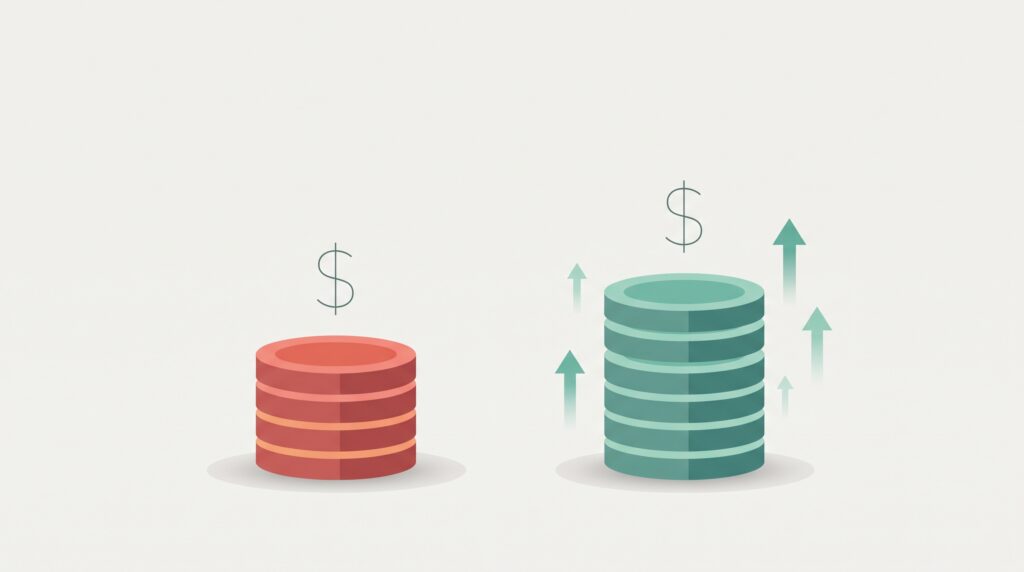
If we apply this to actual revenue, the gap becomes clear: At $1,000 in monthly sales, Gumroad takes in approximately $129.30 in combined fees, while Payhip’s free plan takes in approximately $79.30—a difference of $50 per month, or $600 per year, just from choosing the cheaper platform at the exact same revenue level.
Specifically, in a single $100 sale, Gumroad takes in about $13.20, while Payhip takes in about $8.20—a gap that quickly worsens once you start making regular sales rather than occasional one-time sales.
Comparison Table
| Feature | Gumroad | Payhip |
|---|---|---|
| Free plan platform fee | 10% per sale | 5% per sale |
| Paid plan fee reduction | No paid tier to reduce fee (flat 10%) | $29/mo lowers fee, $99/mo removes it entirely |
| Processing fees | ~2.9% + $0.30 (Stripe/PayPal) | ~2.9% + $0.30 (Stripe/PayPal) |
| Feature gating | Some features tied to plan | No feature gating — all features on free plan |
| Built-in marketplace | Gumroad Discover | Payhip Marketplace |
| Physical product support | Limited | Yes |
| VAT/EU tax handling | Basic | Built-in |
| Storefront customization | Limited | Full customization |
| Support | Help center + email | Live chat |
| Best known for | Creator-first simplicity, organic discovery | Lower fees at scale, transparent pricing |
Features: Where Each Platform Actually Wins
Fees aren’t everything. Gumroad’s biggest structural feature is «Gumroad Discover»— as its built-in marketplace can drive natural traffic to new creators who don’t have an audience yet, which is really valuable if you’re starting from zero followers.
Payhip responds with a different feature: there are no feature restrictions at all. Each package, including the free one, includes full storefront customization, support for physical products, VAT processing for EU sales, and a special marketplace for Payhip— features that some competitors reserve for paid levels only. Payhip also tends to offer faster, more private support via live chat, compared to Gumroad’s help center and email approach.
The Detail Most Comparisons Skip
Here’s something worth noting directly, as it affects choosing the most appropriate platform for your situation: Gumroad payments are made through Stripe Connect, which means they’re limited to countries that only Stripe supports — a real limitation if you or your customers are located in a place that Stripe doesn’t fully support. Neither platform offers direct cryptocurrency payments, nor does either act as a buyer-oriented discovery marketplace the way it does. For example, on Etsy, you’ll still need your own audience or visitor attraction strategy no matter which platform you choose.

If lower fees matter more to you at your current sales volume, start with Payhip
Who Should Choose Which
Choose Gumroad if you’re:
- A completely new creator who doesn’t currently have an audience, and relies partly on the «Gumroad Discover» feature for organic traffic
- Prioritize the simplest possible storefront setup and checkout process
- Pre-set up to receive payments via «Stripe Connect» in one of the supported countries
Choose Payhip if you’re:
- An experienced innovator who achieves consistent monthly sales, where a low percentage of fees results in real financial savings
- Selling physical products alongside digital products
- Selling to EU customers and the need to address the combined VAT
- Someone who wants to unlock all the features without having to pay for a subscription package first

FAQ
Which is cheaper, Gumroad or Payhip?
Payhip is cheaper in the free package —the platform fee is 5% compared to 10% in Gumroad — and paid Payhip packages can reduce these fees further or eliminate them completely, while Gumroad does not have a similar paid package that reduces fees.
How much do Gumroad and Payhip actually take from a $1,000 sale per month?
Gumroad charges approximately $129.30 in combined platform and processing fees, while Payhip’s free package charges approximately $79.30, which represents a difference of $50 per month, or $600 per year, at this revenue level.
Does Gumroad have a paid plan to lower its 10% fee?
Gumroad’s core model is based on a flat 10% fee with no monthly subscription option to lower it, unlike Payhip, which offers $29 and $99 monthly packages that reduce or eliminate platform fees altogether.
Is Payhip better for selling physical products?
Yes — Payhip directly supports physical products, while Gumroad’s platform is more narrowly focused on digital products.
Does Gumroad or Payhip have better built-in marketing tools?
The main feature of «Gumroad» is «Gumroad Discover», a marketing platform that can naturally introduce buyers to new creators, while «Payhip» responds with its own marketing platform, as well as features like complementary sale pop-ups and more detailed reports.
Which platform is better for creators with no audience yet?
Gumroad is often recommended for new creators specifically, because the «Gumroad Discover» feature can attract some organic traffic that a brand-new Payhip store may not have at this point.
Final Verdict
For novice creators who don’t yet have an audience, Gumroad’s built-in discovery marketplace can effectively make up for its high 10% fee in the early stages. But once you start generating consistent monthly sales, accounts clearly lean toward Payhip—, where the plan’s low 5% free fee, unrestricted access to features, and paid tiers that can eliminate platform fees entirely all contribute to real annual savings that Gumroad’s consistent fee model offers no way to reduce.
Sources
Payhip, “Payhip vs Gumroad: Which Is Better For You In 2026?”: https://payhip.com/payhip-vs-gumroad
Payhip, “12 Best Gumroad Alternatives (Cheaper + More Powerful) in 2026”: https://payhip.com/blog/gumroad-alternatives/
CartMango, “Gumroad vs Payhip: The Hidden Trap for Creators (2026)”: https://cartmango.com/gumroad-vs-payhip/
Kourses, “Payhip vs Gumroad: Which is best for you? (2026)”: https://kourses.com/payhip-vs-gumroad/
SideHustleTrail, “Gumroad vs Payhip 2026: Which One Wins?”: https://sidehustletrail.com/gumroad-vs-payhip-2026/
Getly, “Gumroad vs Payhip Fees in 2026: Which Fits Digital Creators?”: https://www.getly.store/blog/gumroad-vs-payhip
InsightRaider, “Gumroad vs Payhip 2026: Fees, Features & Which Is Better”: https://insightraider.com/en/compare/gumroad-vs-payhip
CompareTiers, “Gumroad vs Payhip: Pricing Comparison 2026”: https://comparetiers.com/compare/gumroad-vs-payhip